
Does AI Predict Customer Behavior Correctly?
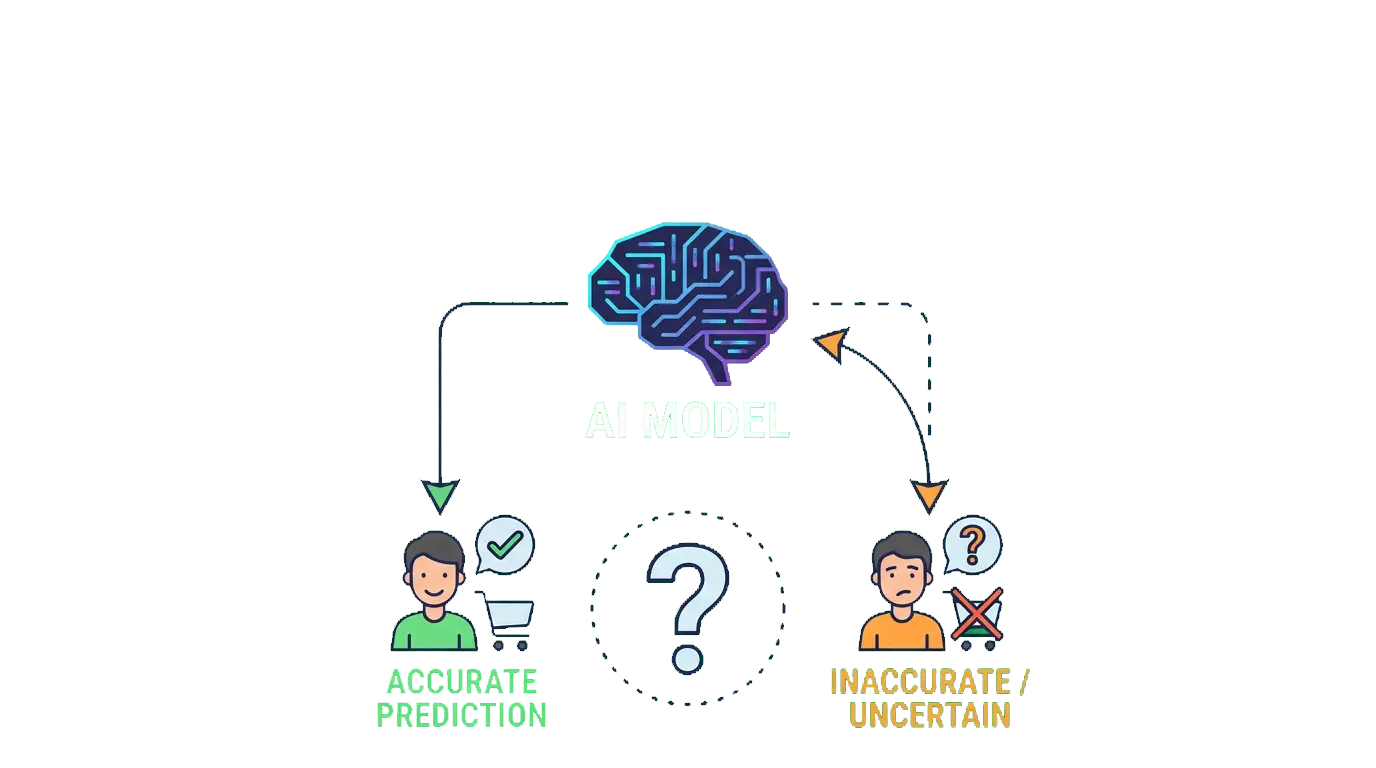
Imagine playing chess, but you know your opponent's next five moves exactly before they even touch the pieces. Or you anticipate what a customer entering your store will buy, when they will hesitate, and what color they will love before they even approach the display. In the past, this ability was only sought in the "crystal balls" of fortune-tellers or magicians. In modern digital business, the name of this magic is Artificial Intelligence (AI). But can AI really predict people's future behaviors correctly? The short answer: Yes. The long answer is that AI doesn't just guess the future; it simply analyzes millions of past data points to calculate the highest probability. If you know a customer's past well enough, you can draw their future with precision.
"Smart" Predictions: How Does AI Do It?
When analyzing customer behavior, artificial intelligence doesn't just look at what they bought, but what they looked at, how much time they spent on the page, and even how they moved the mouse. Based on this data, three major advantages emerge for businesses:
- Hyper-Personalized Offers: Showing just "shoes" to a customer looking for shoes is a thing of the past. AI analyzes the user's weather conditions, location, and past browsing history to offer exactly the "black sneakers for rainy weather" they need. The secret to the success of giants like Amazon and Netflix is this predictive power that brings what's on the user's mind to the screen.
- Prevention of Customer Attrition (Churn): The most expensive customer is a lost customer. Artificial intelligence algorithms sense when a customer starts to move away from the platform (e.g., decreased frequency of app logins or forgetting an item in the cart). Receiving these signals, AI immediately takes a lifesaving step — sending the customer a personalized discount or email they can't refuse.
- Demand and Inventory Management: In retail, an empty warehouse is as damaging as a product rotting in the warehouse. AI calculates upcoming holidays, climate changes, and economic trends to predict with great accuracy how many units of which product will be sold next month and optimizes the supply chain.
Statistics: Digital Evidence of Accuracy
The predictive power of artificial intelligence is not fiction; it is a reality confirmed in the revenue reports of global companies:
- Sales Growth: According to official reports from Amazon, 35% of the platform's total revenue is generated directly by the AI-driven "Recommendation engine" algorithm.
- Loss Prevention: Predictive AI models used in global telecommunications and banking companies identify customers who will unsubscribe (churn) with 85-90% accuracy in advance, drastically reducing company losses.
- Profitability Leap: According to a study by Harvard Business Review, companies using artificial intelligence in sales forecasting can increase their revenue by up to 50% while reducing costs by up to 20%.
Reading Intention: Evolutionary Chronology
The process of understanding the customer has evolved in stages alongside technology:
- 2010s (Demographic Targeting): Predictions in this period were very simple. If the user was a woman between 25-35, she was shown only cosmetics ads. This system considered people's age and gender rather than their individual interests.
- 2015-2020 (Behavioral Targeting - Retargeting): With the development of tracking (cookie) technologies, systems began to focus on the user's clicks. If they looked at a product and didn't buy it, an ad for that product "followed" the customer on other sites for days. While effective, this sometimes exhausted users.
- 2025 and beyond (Intent and Contextual Prediction): Modern Generative AI and machine learning now understand not just what the customer does, but why they do it. The system analyzes the user's emotional state, time of day, and previous interactions (e.g., with a chatbot) to predict their future intention and exactly what they want to buy with amazing accuracy.
AI and Prediction Reality in Azerbaijan Business
In Azerbaijan, AI-based forecasting has made a big leap, especially in the last 3-4 years in the finance and e-commerce sectors. Our local banks and fintech applications (cashback platforms) already analyze your payday, monthly spending habits, and even which days you use taxis more often with AI algorithms. As a result, you are offered a "special cashback for taxi payments" or a personalized credit limit at exactly the moment you need it. This is not a coincidence; it is digital forecasting.
Our large e-commerce and food delivery companies (e.g., your habit of searching for fast food after work on Thursdays) already send you a discount notification for your favorite restaurant at 18:00. However, local SMEs (Small and Medium Enterprises) are still trying to conduct customer analysis with social media comments and old Excel spreadsheets. In the future, only businesses that can not just guess the customer's next move but see that move in advance based on data and take a strategic decision accordingly will survive in the market.
Artificial intelligence is not a magic wand that brings luck or a fortune-teller's ball; it is a giant mathematician doing its job flawlessly. Predicting customer behavior means not leaving your business to chance. Just like in a chess game, if you don't use the digital tools at your disposal to predict the future moves of your opponent or customer, you are playing the game blindfolded. AI opens your eyes, gives meaning to numbers, and creates an unbreakable bond between you and your customer.